
Why Matera & Mostert’s Honda Heat has moved 300 miles - GM explains

League One side Honda Heat’s off-season has been more eventful than most sides having relocated 300 miles in a move designed to turn the club into championship contenders.
Formerly known as the Mie Honda Heat, the division one side – who are owned and operated by Japanese multinational conglomerate automotive manufacturer Honda - has relocated from Mie, Suzuka, a city which stages the annual F1 Grand Prix at the Honda-owned racetrack, to Utsunomiya in Tochigi Prefecture.

The club, which was founded by Honda in 1961 at the Suzuka Factory, has also changed their head coach with South African Marius Goosen promoted from defensive duties to take over from ex-Italy coach Kieran Crowley.
Add in a raft of notable signings including Japan internationals Kenta Fukuda and Waisake Raratubua and the clubs rebrand to Tochigi Honda Heat - ahead of the sixth League One season - and there is reason for more than time-honoured pre-season optimism in Tochigi which is just a 47-minute train ride from Tokyo.

RugbyJP.com spoke to Tochigi Honda Heat’s General Manager Kohei Ohashi in an exclusive interview to find out more about the move and club’s ambitions as Pablo Matera, Franco Mostert and Tevita Ikanivere’s side eye a play-off push next season

RugbyJP: When Honda announced the relocation in 2024, I believe that the stated ambition was to become the best team in Japan within three years. Is that still the target?
Kohei Ohashi: The direction we're aiming for hasn't changed at all. We are seriously aiming for our first-ever national championship since the club's founding.
On the other hand, considering the competitive environment since joining League One and our growth process so far, we have set achieving the national championship in the 2029-30 season as our medium- to long-term goal.
Last season, we achieved our highest-ever ranking of 8th place, demonstrating steady progress.
Our first goal is to become a regular play-off contender, and beyond that, we aim to become champions.
RugbyJP: What was the primary reason for the move?
Kohei Ohashi: There are two main reasons for the relocation.
First, Honda has been strengthening its sports activities since 2022, and rugby is positioned as one of its main strengthening sports. In order to aim for the championship, it was necessary to first create a system that would allow us to consistently advance to the play-offs.
The second is League One's policy. In League One, each club is required to make its games commercially viable, and Honda has also been working on self-promotion. However, even with various measures taken, it was difficult to solve the problem of attracting spectators in Suzuka due to factors such as population size.
We want to show more people the challenge of Honda Heat and deliver dreams and courage to people through sports. In order to achieve this, we decided to relocate to Utsunomiya City,
Tochigi Prefecture, where we can expect greater growth opportunities.
RugbyJP: What are the logistics of the move? Can you tell us about the challenge of moving the whole squad and staff to Tochigi?
Kohei Ohashi: The biggest challenge was the transition of living environments for players, staff, and their families.
Besides athletic aspects, each individual's situation is different, including housing, commuting, and children's educational environment, so we provided support to ensure a smooth transition to the new environment.
Furthermore, it was necessary to proceed with the relocation preparations without interrupting team activities, so we established a specialised staff as a project. Thanks to the cooperation of these members and many other stakeholders, we were able to proceed smoothly.
The relocation is a big challenge, but we see it as an important investment for the club to move to the next stage.
RugbyJP: How is everyone settling in to your new base in Tochigi? Are the training facilities a step-up from Suzuka? What happened to your old training base in Suzuka?
Kohei Ohashi: The new base, completed at the end of August 2026, features an international-standard natural grass field, indoor training facility, and clubhouse, providing an ideal environment for team strengthening. Training, recovery, and meetings can all be conducted in one location, enabling more efficient activities than ever before.
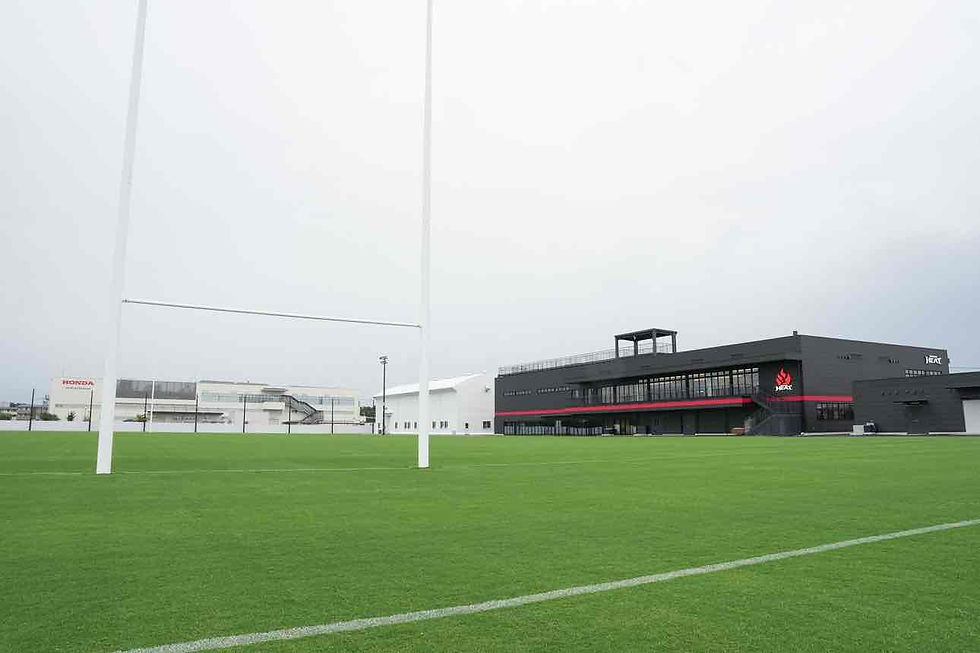
RugbyJP: What does success look like for Honda Heat in the 2026–27 season?
Kohei Ohashi: In terms of competition, our goal is to advance to the play-offs, win one game, and reach the top four.
However, success isn't defined solely by win-loss records. This is our first season in Tochigi, and we hope many people will come to Honda Heat Green Stadium.
We believe that the greatest success would be if the players, coaching staff, and business staff could work together as one, produce results in their respective fields, and take the first step towards becoming a club loved by the community.
RugbyJP: How important is the new environment in Tochigi to achieving those sporting ambitions?
Kohei Ohashi: I believe it is extremely important.
The new training base provides an environment that supports team strengthening and will be a great boost to improving our competitiveness.
Furthermore, Tochigi has a deeply rooted sports culture, and many professional sports teams have developed together with the community. Offering rugby as a new option within this context is of great significance to the club's growth.
We believe it will be an important foundation for growth in both competitive and business aspects.
RugbyJP: Does moving closer to Honda's wider corporate operations provide the team with greater resources or support?
Kohei Ohashi: The purpose of the relocation is not simply to reduce distance from headquarters, but to strengthen the team and achieve business growth.
However, Tochigi Prefecture is home to Honda's research and development base, and many Honda employees and people from related companies reside there.
We believe that creating an environment where everyone can feel closer to the team and support them is a significant advantage.
RugbyJP: You’ve made some strong signings this summer and you have a new head coach in Marius Goosen. Do you think it will take time for everyone to get used to the changes in location, players and the coaching team?
Kohei Ohashi: Head coach Marius Goosen served as the team's coach until last season and has a deep understanding of the team's rugby style and medium- to long-term strengthening policies.
Furthermore, we highly value his understanding of Japanese rugby, as well as his coaching ability to maximise players' potential and his team management skills.
While there is a significant change with the relocation of the home stadium, the direction of strengthening the team remains the same, so we are not overly concerned about adapting to the tactics and playing style.

RugbyJP: Did Pablo Matera sign a new long-term contact at the club? After the 2025 play-off win v Kintetsu Liners he said in the press conference that he didn’t want to spend his last season in Japan (2025-2026) playing in division 2. How important is it to have players such as Matera, South Africa’s Franco Mostert and Fiji captain Tevita Ikanivere as representatives of Honda playing on the world stage for their countries?
Kohei Ohashi: We will refrain from commenting on the details of individual contracts.
On the other hand, it is a great source of pride for the club that world-class players like Matera, Mostert, and Ikanivere are affiliated with Honda HEAT and play for their respective national teams.
Their experience and professionalism have a significant impact on the entire team and have also contributed to the development of our Japanese players.
RugbyJP: You are the only division 1 team whose three Category C foreign Test stars are all forwards. Was that by design or is that just how things worked out? Do you think that can give you an advantage?
Kohei Ohashi: That's exactly right. While we wanted to strengthen and differentiate ourselves from other teams, gaining an advantage in set pieces and contact areas is crucial for advancing in the top ranks of League One.
By identifying our strengths and weaknesses, we decided on a strategy to strengthen our forwards and build our team accordingly. Furthermore, we believe that adding players with world-class experience will improve the overall competitiveness of the team.
Of course, we don't evaluate players solely based on their position; it's a result of a comprehensive assessment of their rugby style and suitability for the team.
RugbyJP: How do you convince high-level Japanese and overseas players that Tochigi Honda Heat is a club they should want to join?
Kohei Ohashi: Our vision is to be "the strongest, most respected, and most beloved team."
In terms of competition, we are seriously aiming to be the best in Japan, and we have an environment where you can grow alongside world-class players and staff.
Furthermore, I believe that being able to participate in the valuable challenge of building a club together with a new base and community is one of the biggest attractions.
We want to convey that this is not just a club where you play rugby, but a club where you can participate in a project that makes history.
RugbyJP: Do you have a message for international rugby fans as to why they should go to see Honda Heat play in Tochigi next season while they’re in Japan?
Kohei Ohashi: I hope you will visit Tochigi.
At the Honda HEAT Green Stadium, you can enjoy Japan's top-level rugby up close, and you can also watch players with experience representing countries around the world play.
Furthermore, Tochigi boasts world-class tourist destinations such as Nikko, abundant nature, and a wonderful food culture.
It is an attractive area where you can enjoy watching rugby and sightseeing at the same time, so when you visit Japan, we recommend you to experience a Honda HEAT game. Honda Heat will kick off their pre-season schedule with a home game against Toutai Kefu's division three side Kamaishi Seawaves on Saturday


Comments